
 Drainage Water Management Awareness - Basic Principles and Practices


Webinar Details
When:
Aug 18, 2011 2:00 pm US/Eastern
Length: 01:32 (hh:mm)
Advance Registration NOT required.
View now on-demand.
Reviewed for Continued Content Relevance: 07/2016
Presenter(s):
- Patrick H. Willey, P.E., Wetland Drainage Engineer, West National Technology Support Center, USDA NRCS
- Hamid Farahani, Ph.D., Water Management Engineer, East National Technology Support Center, USDA NRCS
- Ruth Book, Ph.D., P.E., State Conservation Engineer, USDA NRCS - Illinois
- Jerry Walker, P.E., Agricultural Engineer, Central National Technology Support Center, USDA NRCS
CEU Credits/Certificate Offered:
- Certificate of Participation
- Conservation Planner (CP) - 1 hour Conservation Planning Credit
Virtual Event Format:
Group Viewing Available:
Participate in this training to raise your awareness level of basic agricultural drainage water management principles and practices.
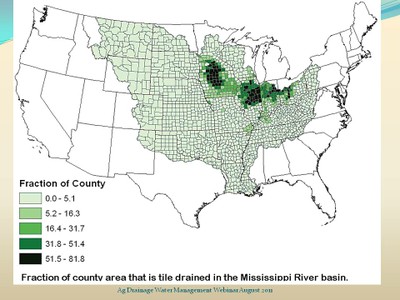
Unrestricted agricultural drainage systems contribute to increased loss of nitrates and other soluble constituents that end up in nearby water bodies. This creates economic, environmental, and human health concerns downstream. A prime example is evident in the Mississippi River Basin, within which the nitrate carried in drainage water is contributing to hypoxia in the Gulf of Mexico. Drainage research and extension programs are exploring ways to reduce the potential environmental impacts of agricultural drainage while retaining its agronomic benefits. Some practices that can reduce nitrate loads on drained soils include: growing winter forage or cover crops, nutrient management, bioreactors, constructed wetlands, and drainage water management (DWM) or controlled drainage. Controlled drainage is an effective practice for reducing nitrate losses from drainage systems, yet its adoption has not been widespread. This presentation explores the importance of DWM via control structures and its impact on drainage water quantity and quality. Basic DWM planning and implementation information is presented so NRCS conservation planners can begin to add DWM to their toolbox of practices for water quality improvement.
This webinar is sponsored by the USDA NRCS East National Technology Support Center.
Internet Explorer plays captions for this webinar.


 Loading