
 Farming for Bees: Conservation of Native Pollinators


Webinar Details
When:
Apr 28, 2010 2:00 pm US/Eastern
Length: 01:29 (hh:mm)
Advance Registration NOT required.
View now on-demand.
Reviewed for Continued Content Relevance: 08/2016
Presenter(s):
- Eric Mader, Assistant Pollinator Program Director, Xerces Society, Portland, OR
CEU Credits/Certificate Offered:
- Certificate of Participation
- Conservation Planner (CP) - 1 hour Conservation Planning Credit
Virtual Event Format:
Group Viewing Available:
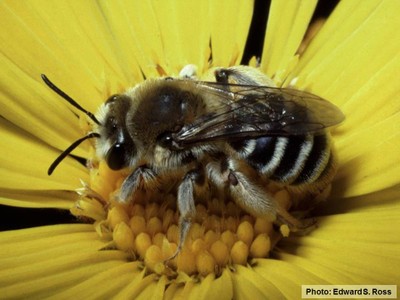
Learn how to plan, create, manage, and protect the habitat of native pollinators that are vital to U.S. agriculture. Although there are numerous pollinator species in the United States, this presentation focuses on native bees.
It is estimated that pollinators provide an ecosystem service that enables plants to produce fruits and seeds in U.S. agriculture that have an annual value between $18 to $27 billion dollars. For many crops, like alfalfa and low bush blueberry, native bees have proven to be many times more efficient at pollination than commercially provided honey bees. This presentation is broken into six parts to give the viewer a better understanding of how to manage for native pollinators.
Viewers will learn about:
- the importance of pollinators;
- native bee diversity;
- the value of natural areas;
- enhancing and restoring habitat;
- pollinator friendly farming; and
- additional resources.
The information presented will be useful to farmers who want to reduce their reliance on commercially available honey bees, and the associated costs of this activity, as well as to individuals just interested in learning more about native bees.
This webinar is sponsored by the USDA NRCS East National Technology Support Center.
Presented in partnership with 


 Loading