
Integrated Weed Management and Insect Pests in Dryland Cereal Systems


Webinar Details
When:
Dec 18, 2017 11:00 am US/Eastern
Length: 01:00 (hh:mm)
Advance Registration NOT required.
View now on-demand.
Presenter(s):
- Dr. Sanford Eigenbrode, University of Idaho
- Dr. Ian Burke, Washington State University
Virtual Event Format:
Group Viewing Available:
The sixth and last in the REACCH Advances Webinar Series, a collaboration between REACCH and the Climate Learning Network, this webinar provides an overview of integrated weed management and insect pests in dryland cereal systems in the inland Pacific Northwest.
This will be a two-part webinar with overviews of weed identification and management and some of the key insect pests and weeds affecting cereal systems in the dry inland Pacific Northwest. Insects to be covered are cereal aphids, cereal leaf beetle, Hessian fly, and wireworms. The webinar will cover highlights of the biology of each, considerations for their management, and how projected climate change might affect them. Video segments help with recognition of some of these species.
The webinar is a part of a series based on a book published by Regional Approaches to Climate Change (REACCH) - Pacific Northwest Agriculture entitled Advances in Dryland Farming in the inland Pacific Northwest.
Download or Request a Copy of Advances in Dryland Farming in the Pacific Northwest
About REACCH
The REACCH project was initiated in 2011 to ensure sustainable cereal production in the inland Pacific Northwest. The project was led by an interdisciplinary team of scientists and other professionals from three land grant institutions and the USDA Agricultural Research Service, with funding from the National Institute of Food and Agriculture’s Climate Variability and Change Program. Participants from many disciplines related to agricultural, climate, socioeconomics, and information sciences engaged in an integrated research, education, outreach and extension effort to study complex cereal production systems and their responses to drivers of change. Visit REACCH at reacchpna.org
About the Climate Learning Network (CLN)
The CLN was formed at the beginning of 2015 to promote climate literacy among Extension professionals who work in the areas of agriculture and natural resources and to connect Extension programs within the US Land-grant University System with the 10 USDA Climate Hubs. The program is a collaboration between eXtension, Southern Regional Extension Forestry, and the USDA. Visit the CLN at climatelearning.net
Full Schedule of the REACCH Advances Fall Webinar Series
Nov. 13 - Climate Considerations for Dryland Farmers - Drs. Liz Allen & Katherine Hegewisch
Nov. 20 - Pathogens in Dryland Cereal Systems - Dr. Tim Paulitz
Nov. 27 - Rotational Intensification and Diversification - Isaac Madison & Dr. Bill Pan
Dec. 4 - Nutrient Management and Precision Application Technology - Drs. Tabitha T Brown & Erin Brooks
Dec. 11 - Tillage and Residue Management Systems and Impacts on Soil Health in Drylands - Drs. Prakriti Bista & Rakesh Awale
Dec. 18 - Integrated Weed Management and Insect Pests in Dryland Cereal Systems -Drs. Sanford Eigenbrode & Ian Burke
ALL WEBINARS BEGIN AT 8 AM PST/11 AM EST AND LAST FOR APPROXIMATELY ONE HOUR
About Dr. Sanford Eigenbrode
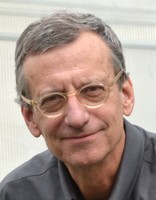 In addition to being project director for REACCH, Dr. Eigenbrode directs a USDA Risk Avoidance and Mitigation Program-funded regional program on management of aphid borne viruses affecting legume crops in the inland Northwest. Educated at Cornell University where he received his doctorate in 1990, Eigenbrode joined the University of Idaho College of Agricultural and Life Sciences faculty in 1995. He serves as professor and chair of the Division of Entomology within the Department of Plant, Soil and Entomological Sciences.
About Dr. Ian Burke
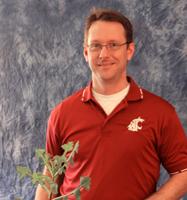 Dr. Ian Burke is an Associate Professor at the Department of Soil and Crop Sciences at Washington State University. His research is focused on basic aspects of weed biology and ecology with the goal of integrating such information into practical and economical methods of managing weeds in the environment.


 Loading