Sponsor Img The 2016 Billion-ton Report: Towards Commercialization

Corner Down Image
Rated 3.4 out of 5 stars by viewers. 24 viewer ratings.

Green Savings!

Corner Down Image

Click on the graph below for a detailed Green Savings analysis of this event.


Webinar Details

Corner Down Image

When:

Oct 20, 2015 2:00 pm US/Eastern

Length: 01:00   (hh:mm)

Advance Registration NOT required.

View now on-demand.

Presenter(s):

  • Matthew Langholtz, Natural Resource & Environmental Economist, Oak Ridge National Laboratory
  • Rebecca Efroymson, Senior Scientist, Oak Ridge National Laboratory

Virtual Event Format:

Group Viewing Available:

You can view this webinar now on-demand.


The 2016 Billion-ton report (BT16) is third in series of reports evaluating potential biomass resource supply of the conterminous United States. The 2005 Billion-Ton Study (BTS) identified the potential to produce upwards of 1 billion dry tons of biomass annually on the United States, sufficient to displace 30 percent of then-current petroleum consumption. 2011 Billion-Ton Update (BT2) modeled potential economic availability under assumed market and yield scenarios. Building on these previous analyses, the BT16 1) updates the farmgate/roadside analysis using latest-available data and specified enhancements, 2) adds additional feedstocks, including algae and specified biomass crops, and 3) expands the analysis to include transportation costs to biorefineries under specified logistical assumptions. The 2016 Billion-Ton Report (BT16) is to be released in two volumes. Volume 1 of the BT16 focuses on resource analysis as described above. Volume 2 of the BT16, targeted for release in early 2017, evaluates changes in select environmental indicators (water quality, water quantity, greenhouse gas emissions, air quality, soil organic carbon, and biodiversity) associated with select production scenarios of the BT16 Volume 1.
*Preliminary results are provided for this report.
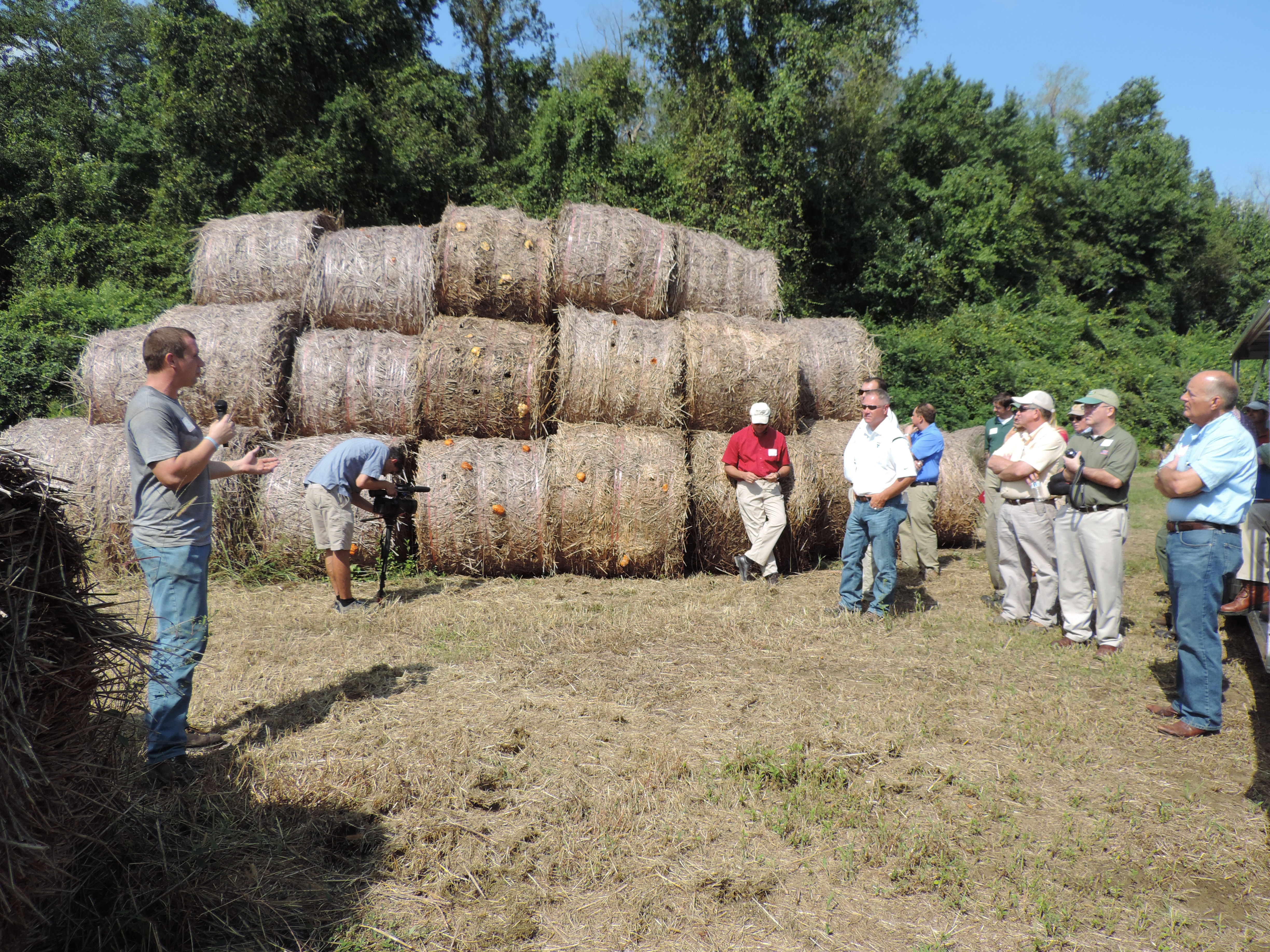
DSCN0494.JPG

Need Help!

For information on connecting to the webinar or setting up YouTube - Embedded Video, please check out the FAQ section. If you continue to have issues connecting to the webinar or if you're having trouble with this website, contact us at contact@sref.info.

If this webinar is a standard portable media file format such as (.mp4, .avi, .mov, .flv) or a Microsoft Windows Media File (.wmv), you will need to have the Windows Media Player, Apple Quick Time Player, Real Player or other media player installed on your computer to view/play the webinar file. Depending on your internet browser, you may need to install a media player plug-in for your browser.

NOTE for Mac / ios users: if the webinar format is .wmv (a Windows Media File), you may need to install a 3rd party .wmv viewer on your computer such as Flip4Mac before you can playback this media file format.


SPONSORS:

  • Southern Regional Extension Forestry
    Southern Regional Extension Forestry
  • USDA NRCS
    USDA NRCS
  • NC State University Extension
    NC State University Extension
  • USDA Forest Service
    USDA Forest Service
  • The University of Georgia
    The University of Georgia

CONTACT:

COMMENTS & QUESTIONS

Full Name:

Email:

Message:


For the latest up-to-date live and on-demand agriculture webinars, videos, training, and events from the US Department of Agriculture, State Ag Divisions, University Cooperative Extension, and other notable agriculture organizations, visit the Agriculture Webinar Portal
For the latest up-to-date live and on-demand forestry and natural resource webinars, videos, training, and events from the USDA Forest Service, State Forest Divisions, University Cooperative and Forestry Extension, and from other notable forestry related organizations, visit the Forestry Webinar Portal
For the latest up-to-date live and on-demand conservation of natural resources webinars, videos, training, and events related from the USDA Natural Resource Conservation Service (NRCS), State Conservation and Natural Resource Divisions, University Natural Resource Extension, and other notable conservation and natural resource organizations, visit the Conservation Webinar Portal

Loading