Sponsor Img How Both Short and Long Term Wildlife Research can Inform Management

Corner Down Image
Rated 4.3 out of 5 stars by viewers. 56 viewer ratings.

Green Savings!

Corner Down Image

Click on the graph below for a detailed Green Savings analysis of this event.


Webinar Details

Corner Down Image

When:

Nov 10, 2020 3:00 pm US/Eastern

Length: 00:45   (hh:mm)

Advance Registration NOT required.

View now on-demand.

Presenter(s):

  • Dr. Lora Smith - Scientist, The Jones Center at Ichauway

Virtual Event Format:

Group Viewing Available:

You can view this webinar now on-demand.


Long term research plays an invaluable role in informing natural resource management, particularly for long-lived wildlife species. However, short term and even opportunistic research can also yield important and sometimes surprising results relevant to management.

Gopher Tortoise


In this webinar, Dr. Smith will discuss management implications of a follow up survey of the alligator snapping turtle population on the Flint River, 22 years after eliminating harvest, the success of a forest restoration project in the eyes of pine snakes, and the unexpected added value of surveys of one threatened species (the gopher tortoise) for the conservation of another (the gopher frog).


Speaker Info

JessicaMcCorveyLora L. Smith, PhD
The Jones Center at Ichauway
Scientist
lora.smith@jonesctr.org

Dr. Lora L. Smith’s research program is centered on the ecology of amphibians and reptiles of the Southeastern Coastal Plain, and in particular on herpetofaunal linkages between aquatic and terrestrial systems and keystone species in these systems. She is also investigating the interactions between natural and human disturbance legacies in longleaf pine forests and herpetofaunal communities. Aspects of her research program are incorporated into field courses for university students.
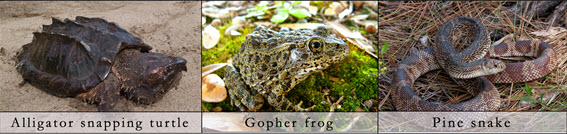
 

Turtle Snake Frog Image

Need Help!

For information on connecting to the webinar or setting up YouTube - Embedded Video, please check out the FAQ section. If you continue to have issues connecting to the webinar or if you're having trouble with this website, contact us at contact@sref.info.

If this webinar is a standard portable media file format such as (.mp4, .avi, .mov, .flv) or a Microsoft Windows Media File (.wmv), you will need to have the Windows Media Player, Apple Quick Time Player, Real Player or other media player installed on your computer to view/play the webinar file. Depending on your internet browser, you may need to install a media player plug-in for your browser.

NOTE for Mac / ios users: if the webinar format is .wmv (a Windows Media File), you may need to install a 3rd party .wmv viewer on your computer such as Flip4Mac before you can playback this media file format.


SPONSORS:

  • Southern Regional Extension Forestry
    Southern Regional Extension Forestry
  • USDA NRCS
    USDA NRCS
  • NC State University Extension
    NC State University Extension
  • USDA Forest Service
    USDA Forest Service
  • The University of Georgia
    The University of Georgia

CONTACT:

COMMENTS & QUESTIONS

Full Name:

Email:

Message:


For the latest up-to-date live and on-demand agriculture webinars, videos, training, and events from the US Department of Agriculture, State Ag Divisions, University Cooperative Extension, and other notable agriculture organizations, visit the Agriculture Webinar Portal
For the latest up-to-date live and on-demand forestry and natural resource webinars, videos, training, and events from the USDA Forest Service, State Forest Divisions, University Cooperative and Forestry Extension, and from other notable forestry related organizations, visit the Forestry Webinar Portal
For the latest up-to-date live and on-demand conservation of natural resources webinars, videos, training, and events related from the USDA Natural Resource Conservation Service (NRCS), State Conservation and Natural Resource Divisions, University Natural Resource Extension, and other notable conservation and natural resource organizations, visit the Conservation Webinar Portal

Loading