


Invited Speakers
 36th Southern Forest Tree Improvement Conference
Overcoming Tree Improvement Bottlenecks with New Technologies
SFTIC 2021 Invited Speakers
Opening Plenary Session Speakers
 Dr. Jerry Tuskan
The genetic (and funding) opportunities, challenges and expectations facing tree improvement, even with world-class genomics resources: A Populus case study
Gerald Tuskan is the Director of the DOE Center for Bioenergy Innovation at Oak Ridge National Laboratory (ORNL), a 15-institution effort focused on accelerating the domestication of bioenergy-relevant non-model plants and microbes to enable high-impact innovation across the bioenergy supply chain. He previously was Group Leader of the Plant Systems Biology group at ORNL, co-lead for the Plant Genomics Program at the Department of Energy (DOE) Joint Genome Institute (JGI) and co-lead PI for DOE Plant-Microbe Interactions project. His research over the past 25 years has focused on the accelerated domestication of Populus through genomic selection approaches and genetic manipulation of targeted genes and gene families, with focus on cell wall biosynthesis.
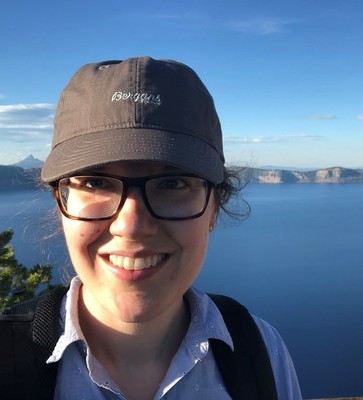 Dr. Anna Conrad
Spectral-based tools for disease resistance phenotyping in trees
Anna Conrad is a Research Plant Pathologist with the USDA Forest Service, Northern Research Station, Hardwood Tree Improvement and Regeneration Center in West Lafayette, IN. She graduated with a BS in Environmental Biology from SUNY College of Environmental Science and Forestry in 2010 and received a PhD in Plant Pathology from The Ohio State University in 2015. Dr. Conrad joined the USDA Forest Service in August 2020. Her current research focuses on developing spectral-based tools for disease resistance phenotyping and early disease detection, with a particular interest in developing tools for use in tree improvement programs.
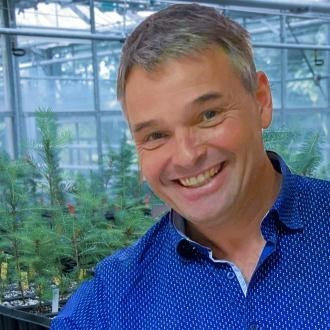 Dr. Ingo Ensminger
Something in the air – Drone-based high-throughput phenotyping of trees
Ingo Ensminger is an Associate Professor in the Department of Biology at the University of Toronto Mississauga. He studies plant-environment interactions and the impact of climate change on metabolism and photosynthesis of plants from molecular to leaf, species and ecosystem level. His research focuses on (i) developing tools for monitoring photosynthesis and carbon uptake of trees and for high-throughput-phenotyping of physiological traits using remote sensing and drones, and on (ii) examining the physiological and molecular mechanisms that contribute to adaptation and acclimation of trees to warmer and drier climate.
Schatz Symposium Speakers
 Dr. Bode Olukolu
A quantitative Reduced Representation Sequencing (qRRS) of genomes; a paradigm shift in NGS-based genotyping
By integrating quantitative genetics and new -omic technologies, Dr. Bode Olukolu's research aims to understand the genetic basis and molecular mechanisms underlying important agronomic traits for applications in targeted crop improvement. He worked on tree species earlier in his career and now works on maize and polyploid sweet potato. His current research includes plant-microbe-microbe interactions, as well as development of genomic resources, NGS-related protocols, and bioinformatic tools.He has a patented novel quantitative NGS-based protocol that provides dosage-sensitive genotyping and broad-spectrum metagenomic data within a single assay. This inexpensive option is particularly important for complex polyploids and strain-level taxonomic profiling. The metagenome profile provides a promising strategy for objective disease rating by quantifying pathogen load. To complement the novel features of this technology, he has since developed a suite of fully automated open-source software.
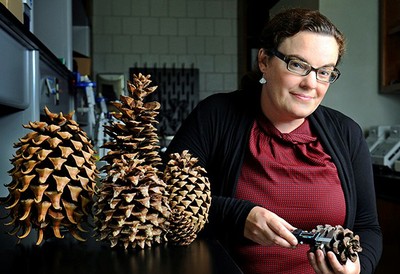 Dr. Jill Hamilton
Genomics in rare species conservation: teasing apart evolutionary history and adaptation
Jill Hamilton is currently an Associate Professor in the Department of Biological Sciences at North Dakota State University and incoming Director of the Schatz Center for Tree Molecular Genetics and Ibberson Chair in Silviculture Research at Pennsylvania State University. She is co-PI on the PopUp Poplars project - a nationwide partnership between universities and arboreta aimed at studying climate adaptation and hybridization in Poplar. Her research program uses population, landscape, and functional genomics alongside climate modeling, and quantitative experiments to understand the genetic basis of trait variation underlying adaptation to climate, climate-related stresses, and disease. With her research team, she aims to understand the evolutionary and ecological factors that influence the distribution of genetic variation across species’ ranges with application to conservation and restoration.
 Dr. Sally Mackenzie
Epigenetic influences on plant growth response, and potential for enhancing stress resilience in tree species
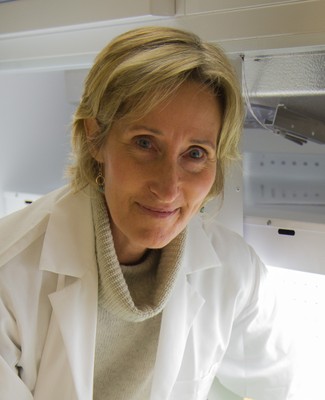
Sally Mackenzie is the Lloyd and Dottie Huck Chair for Functional Genomics and Professor of Biology and Plant Science at Pennsylvania State University. She serves as Director for the Plant Institute at Penn State, where plant researchers share interests in research infrastructure, student training efforts and multi-investigator collaboration. Prior to her group’s move to Penn State in 2017, Dr. Mackenzie served as the Ralph and Alice Raikes Chair in Plant Science at the University of Nebraska-Lincoln and as Founding Director for the Center for Plant Science Innovation. Dr. Mackenzie received her undergraduate training at U.C. Davis with a major in Botany, and PhD training at the University of Florida. Sally was elected Fellow of the American Association for Advancement of Science in 2004, Fellow of the American Society for Plant Biologists in 2013, and ASPB President in 2017. Her research focuses on plant organelles as environmental sensors and their role in plant phenotypic plasticity.


 Loading